You want to invite guests and are wondering how to Style the table can, which appears calm and harmonious. Which glasses belong where and why do some tables immediately look high-quality, while others appear unsettled?
Being able to set a table isn't a talent. It's a System. If you understand how to set a table meaningfully, it creates Structure. And that is precisely where Atmosphere.
At its core, it’s about two levels. One is functional, meaning what is needed. The other is design
In this article, you will get a clear overview. If you want to implement the details with complete confidence, you will also find here a free Whitepaper with complete setups and visual guidance
Setting the table without uncertainty
Would you like to know if your table is truly set correctly, and not just „roughly right“?
In the white paper "Table Etiquette – How to Set a Table" you will receive:
→ 4 complete setups (breakfast, informal, formal, coffee reception)
Visual arrangement at a glance
→ Checklist for every occasion
Do's and Don'ts
Deck the table
Setting the table describes the functional basis. Plates, cutlery, and glasses are placed according to the menu.
Setting the table takes it a step further. This is about proportions, materials, and how everything works together.
One ensures that everything works. The other ensures that it feels good.

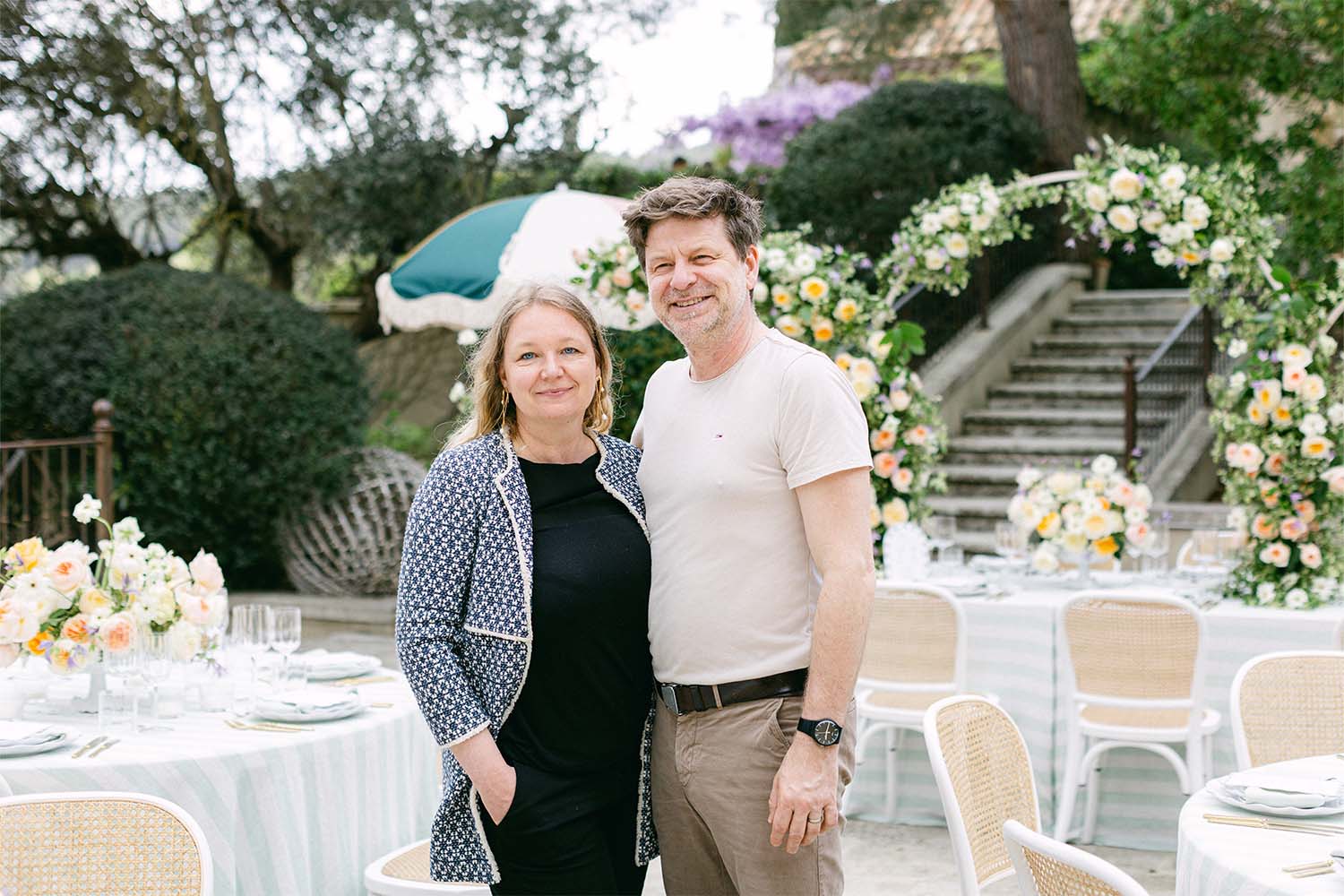
Irka setting the table. Design at the moment – aesthetics emerge in the details.
The most important points at a glance
These principles help you get a feel for the structure quickly. How exactly you apply them depends on the occasion.
- Setting the table is functional. Laying the table means designing consciously.
- The arrangement follows a clear logic from the inside out.
- The glasses are positioned to the right of the knife and create a smooth line.
- Sufficient spacing creates a relaxed overall impression.
- Only cover what is truly needed. Less appears clearer.
- One accent is enough. Atmosphere is created through reduction.
The 7 Fundamentals of Table Setting
To think from the inside out
The plate forms the centre. The cutlery is used in the order in which the courses are served.
2. Logically place cutlery
Forks on the left, knives on the right. The blade always faces the plate.
3. Arrange glasses clearly
The water glass is to the right of the knife, slightly above it. Further glasses are aligned to it.
Keep your distance
Sufficient space between place settings ensures that the table appears calm.
Observe proportions
Decorations should be kept low so as not to disturb conversation.
6. Allow for free space
A table needs space. Too many elements can quickly create a cluttered look.
7. Choose a connecting element
Material, colour, or shape should be repeated. This creates a harmonious overall impression.

Classic European table setting with a clear arrangement of plates, cutlery, and glasses.
Example: A formal table setting explained simply
The basic elements – tablecloths, crockery, cutlery, glassware, and decoration – always form the foundation. However, their selection and placement will vary depending on the occasion and the desired effect. Below, we will show you how to set a table for a formal, European setting as an example.
1. Choose fine table linen:
Eine hochwertige Tischdecke bildet die Grundlage, alternativ kann ein Tischläufer mit Platzsets kombiniert werden.
2. Use the charger plate as a base:
A charger plate gives the place setting structure and remains on the table throughout the entire dinner. The starter plate or soup bowl is placed on top.
3. Arrange cutlery according to courses:
- Forks are placed to the left of the plate, knives and spoons to the right.
- Cutlery is used from the outside in — the outer pieces are intended for the first course.
- Dessert cutlery is placed above the plate.
4. Arrange glasses strategically:
- A water glass is placed directly above the knife.
- To the left, the white wine glass is placed, followed by the red wine glass.
- If an aperitif or champagne is served, the corresponding glass is placed at the front.
5. Fold napkins artistically:
Elegant folds or a napkin ring create a refined look. The napkin can be placed on the charger plate or to the left of the fork.
6. Choose harmonious decoration:
A festive table is defined by details such as candleholders, menu cards, and fresh flowers. These elements should be placed in a way that never obstructs guests’ sightlines.
The number of elements is not important, but rather the Clarity in arrangement. That's exactly what makes the table look calm and cohesive.
Do you want to see how a complete setup is actually put together?
The white paper contains a step-by-step explanation of several table settings, including visual layouts and specific examples for different occasions.
Typical table setting mistakes
- Too many glasses with no clear function
- Decoration that blocks eye contact
- Cutlery that doesn't match the menu
- Uneasy combination of colours and materials

If you are unsure, check three things. Are they Lines clear. Remains sufficient Free space. Is there a visible Focus.
Setting the table appropriately for different occasions
A breakfast setting is quite different from a formal dinner. In the morning, plates, cups, and cutlery are often sufficient. For festive occasions, multiple courses, additional glasses, and more structure are added.
These exact differences sometimes make the setup uncertain, because each setting follows the same logic but is implemented differently.
White Glove Service
Concept · Styling · On-site Assembly
We'll handle the design and setup of your table so everything looks harmonious and you can concentrate on your guests.
Conclusion: Setting the table is structure, not talent
Being able to set a table isn't about perfection, but about clarity. When you internalise a system, it becomes easier and looks more cohesive every time.
Whether simple or festive. With a clear structure, atmosphere is created almost by itself. That's precisely what makes the difference between a randomly set table and one deliberately designed.
A set table shows that you've given thought to things. It creates a sense of calm in the room and gives your guests a sense of direction before the first conversation even begins.
We'll show you what this can look like in practice in our article Decorating tulips in glass vases. A pared-back look that can be put together quickly and still makes an impact.
STYLISHLY COVER -
FOR ALL THOSE WHO LEAVE NOTHING TO CHANCE
So that nothing is forgotten when setting the table: Infographics on arrangement, do's & don'ts and a checklist for various dinner settings, breakfast and coffee tables - in compact PDF format - for reference whenever you need it.

„Learn the rules like a pro, so you can break them like an artist.“ – Pablo Picasso